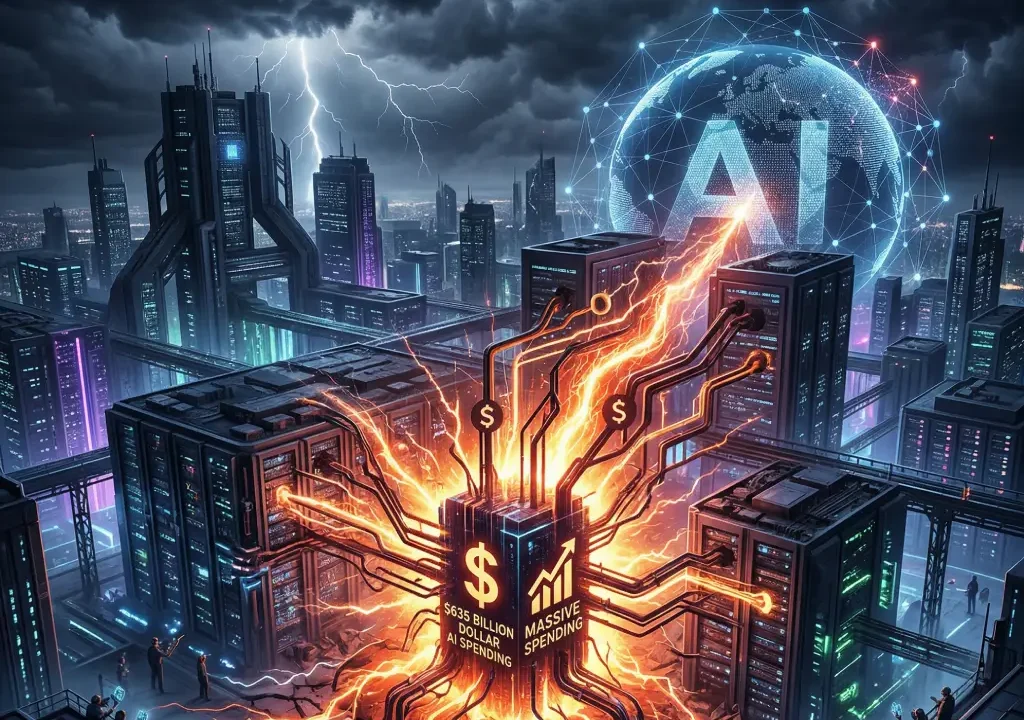
Big Tech’s Big Tech AI spending hits $635 billion through 2026, primarily on AI data centers that strain power grids nationwide. This unprecedented investment triggers an energy crisis as electricity demand surges 12% of U.S. total by 2028. Companies race to secure power while facing regulatory pushback and rising costs.
What Drives Big Tech AI Spending?
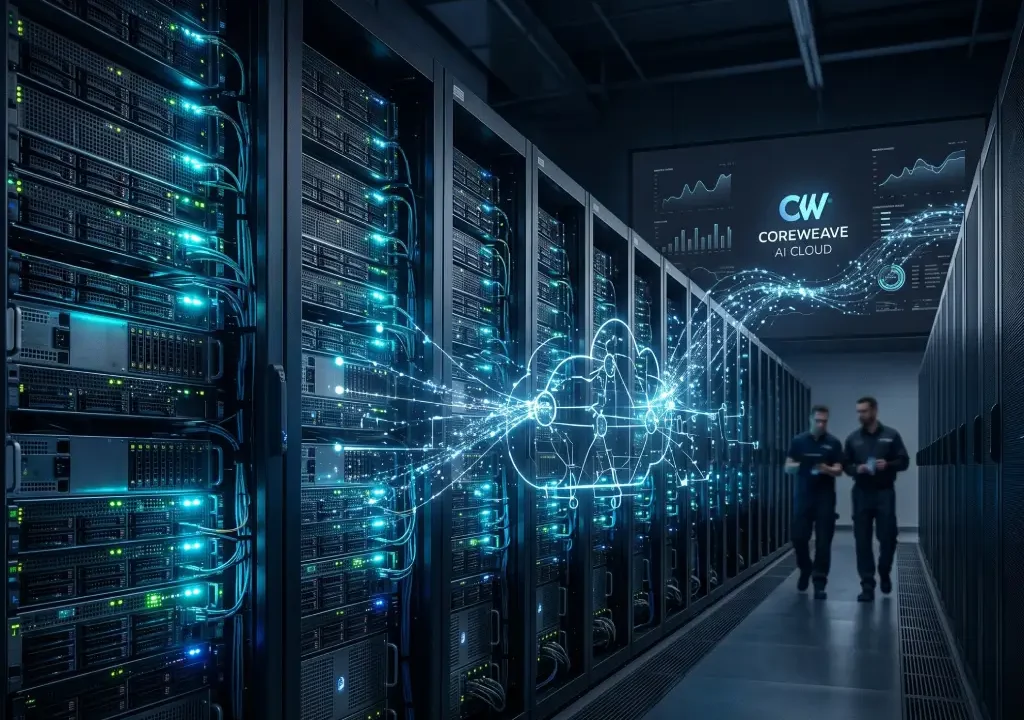
Big Tech AI spending fuels explosive growth in GPU-packed data centers. Microsoft, Google, Amazon, and Meta allocate over $600 billion for AI infrastructure from 2024-2026. Each hyperscale facility consumes power equivalent to 100,000 homes, with cooling alone taking 40% of energy.
A single ChatGPT query uses 10x the electricity of a Google search—2.9 watt-hours versus 0.3. Scaled to billions of daily requests, AI inference dominates consumption. Training frontier models like GPT-5 adds hundreds of gigawatt-hours per run.
The International Energy Agency projects data centers hitting 945 TWh globally by 2030—double today’s levels. U.S. data centers already claim 4.4% of national electricity, with carbon intensity 48% above average due to fossil fuel reliance in key regions.
Energy Crisis Unfolds
Grid Strain and Blackout Risks
AI data centers cluster in Virginia (70% of region’s power) and Ohio, overwhelming local grids. Dominion Energy reports 15 GW new demand by 2028—equal to 10 nuclear plants. Blackouts threaten as residential rates climb 20% above inflation since 2022.
Texas and Georgia face similar pressures. ERCOT warns AI load could force rolling brownouts during peak summer hours. Utilities demand ratepayer subsidies for grid upgrades, sparking political backlash.
Carbon Emissions Surge
AI drives Big Tech emissions up 25% YoY despite net-zero pledges. Google’s 2025 report showed Scope 1&2 emissions rising 48% from AI alone. Microsoft’s carbon footprint grew despite $10B renewable deals. Untracked inference emissions push real impact higher.
Big Tech’s Desperate Power Grab
Nuclear Revival Bets
Microsoft partners with Helion Energy for fusion by 2028. Amazon buys 960 MW from Talen nuclear plant. Google contracts small modular reactors (SMRs) from Kairos Power. Meta secures 20-year PPA for 4 GW nuclear capacity.
These deals bypass slow renewables. SMRs promise 24/7 baseload power without weather dependency, but face NRC delays and waste concerns.
Direct Power Purchases
Tech giants buy entire power plants. Google acquired 2.5 GW capacity in Oregon. Amazon’s $650M deal for Susquehanna nuclear stake shocked regulators. These “behind-the-meter” arrangements sidestep utility queues but raise monopoly fears.
Cost Explosion Reality
Big Tech AI spending masks true economics. Goldman Sachs estimates $1 trillion needed by 2030 including transmission upgrades. Levelized cost of AI compute hits $50-100 per million tokens—10x cloud VMs. Enterprises balk as GPU rental rates double.
Hyperscalers pass costs through:
- AWS EC2 P5 instances up 40%
- Azure NDv5 series pricing spikes
- Google TPUs require 3-year commitments
Developer backlash grows on Hacker News as indie AI projects become uneconomic.
Government and Utility Response
Ratepayer Protection Push
Illinois and New York cap data center subsidies. Virginia’s governor vetoes 10 GW tax breaks. FERC investigates market manipulation as tech bids distort wholesale prices 30% higher.
Utilities form AI task forces. PG&E demands dynamic pricing—AI runs free at 3AM, full cost at peak.
Federal Grid Rescue
DOE’s $685M grid modernization grants prioritize AI regions. Trump administration fast-tracks SMR permits, clashes with California over renewables mandate. Bipartisan infrastructure bill 2.0 eyes $200B transmission buildout.
Efficiency Race Heats Up
Big Tech counters with tech fixes:
- Liquid cooling cuts energy 30% (NVIDIA GB200)
- Chiplet designs boost FLOPS/watt 4x
- Inference optimization (TensorRT-LLM) halves runtime power
- Sparse models reduce active parameters 90%
Google DeepMind claims 40% grid savings via AI-optimized renewables dispatch. MIT Technology Review verifies modest gains, but scale limitations persist.
Future Outlook
Big Tech AI spending tests energy physics limits. By 2028, AI could consume power of 22% U.S. households. Fusion breakthroughs or geothermal scale-up offer hope, but 2026-2027 crunch looms.
Winners invest ahead: Microsoft eyes nuclear dominance, Amazon builds private grids. Losers face stranded assets as efficiency gaps widen.
This energy shock redefines AI economics. Sustainable compute becomes competitive moat. Track developments via IEA energy trackers.