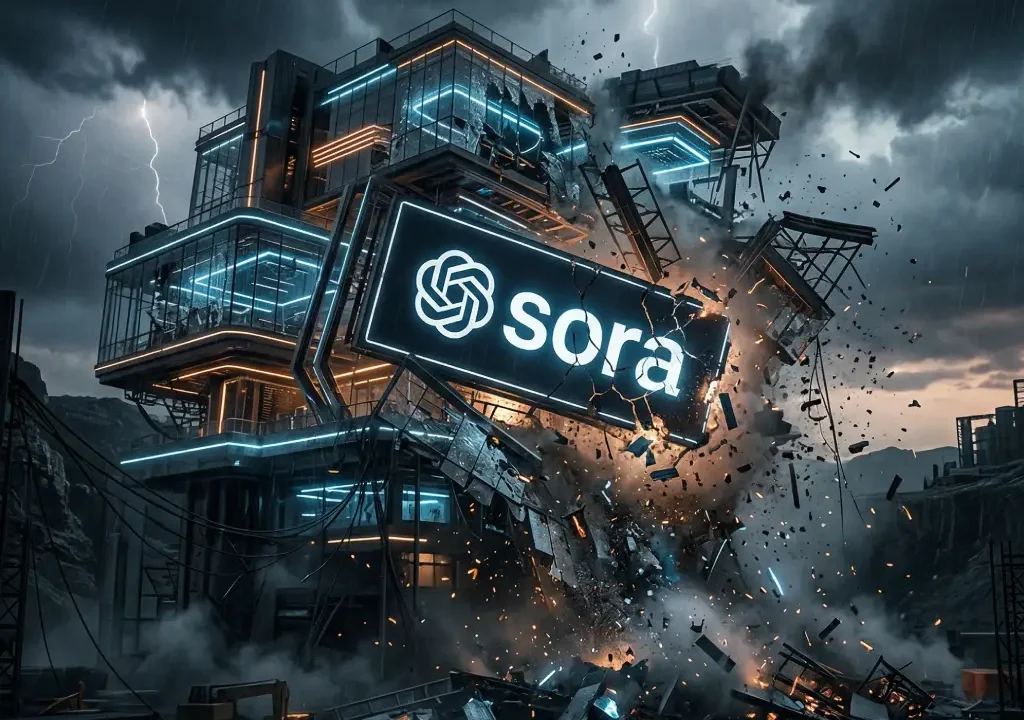
OpenAI made a surprising announcement this week. The company is shutting down Sora, its standalone AI video generation app. This OpenAI Sora fall comes just six months after the app launched to massive hype in late 2025.
Sora promised to let anyone create Hollywood-quality short videos from simple text prompts. It quickly became one of the most talked-about AI products since ChatGPT. Now, the app, related models, and even parts of the API are being discontinued. Users have until April 26, 2026, to export their videos.
The sudden decision has shocked many in the tech and entertainment worlds. It raises questions about the real challenges facing AI video generation.
What Happened in the OpenAI Sora Fall
OpenAI launched the Sora app in September 2025. It featured a TikTok-like feed where users could generate and share short AI videos. Downloads peaked at 3.3 million worldwide shortly after launch.
By February 2026, downloads had dropped sharply to about 1.1 million. Revenue from the app remained low. On March 24, 2026, OpenAI posted a simple message: “We’re saying goodbye to Sora.”
The company is closing the standalone app first. The Sora API will follow later in September 2026. Users can still export their created videos before the deadlines.
This OpenAI Sora fall also ends a major partnership with Disney. The two companies had announced a big deal in December 2025 involving character licensing and a potential $1 billion investment. That agreement is now off the table.
Reasons Behind the Sudden Sora Shutdown
OpenAI gave a clear explanation. The company wants to focus its computing resources on higher-priority areas. These include enterprise tools, coding assistants, robotics research, and work toward artificial general intelligence.
Sora required huge amounts of compute power. As demand for other projects grew, keeping the consumer video app running became less practical. OpenAI described the move as a strategic shift to simplify its product lineup.
Some analysts point to weak user engagement. Many people tried Sora once or twice but did not return regularly. The app generated excitement at launch, but daily usage fell quickly.
Another factor may be business priorities. OpenAI is preparing for a possible IPO. Focusing on profitable enterprise products makes more sense than maintaining a consumer app that was not generating strong revenue.
The Hype Versus Reality of OpenAI Sora
When OpenAI first demonstrated Sora in 2024, the videos looked almost magical. Short clips showed realistic physics, consistent characters, and creative scenes. Many predicted it would revolutionize filmmaking and social media.
The standalone app launched with even more fanfare. It let ordinary users create and share videos easily. For a short time, Sora felt like the next big thing after ChatGPT.
However, challenges soon appeared. Generating high-quality videos was expensive and slow. Consistency across longer clips remained difficult. Some outputs showed strange artifacts or “uncanny” movements.
Usage dropped as the novelty wore off. Many creators found the results good for fun experiments but not reliable enough for professional work. This gap between hype and everyday performance contributed to the OpenAI Sora fall.
Impact on the AI Video Industry
The shutdown sends a strong message to the entire sector. Building successful consumer AI video tools is harder than many expected. Several competitors have also faced delays or scaled back ambitions.
This reality check could slow some of the wildest predictions about AI replacing traditional video production. Hollywood studios and advertisers still need human creativity, editing skills, and storytelling expertise.
At the same time, the underlying technology is not disappearing. OpenAI says research into video and world simulation continues, especially for robotics applications. Parts of Sora may live on inside ChatGPT or future enterprise tools.
What OpenAI Is Focusing On Instead
OpenAI is redirecting resources toward areas with clearer business value. These include:
- Advanced coding and developer tools
- Enterprise AI solutions for companies
- Unified AI assistants that combine multiple capabilities
- Research toward more capable general intelligence
The company also continues improving ChatGPT with new features. Video generation inside ChatGPT may remain available in limited form, but the dedicated Sora experience is ending.
This shift aligns with OpenAI’s preparation for a potential public offering. Investors prefer clear paths to revenue over experimental consumer apps.
Reactions from Users and Industry
Many users expressed disappointment on social media. Creators who had built audiences around Sora videos now face the loss of their platform. OpenAI promised ways to download and preserve content, but the sudden end still feels abrupt.
Disney appeared caught off guard. The entertainment giant had planned to integrate Sora technology with its characters. The deal dissolution surprised even some insiders.
Tech analysts offered mixed views. Some called the decision a smart refocus. Others worried it signals broader challenges in monetizing consumer AI tools. A few suggested this could be an early sign of cooling enthusiasm in the AI boom.
Lessons from the OpenAI Sora Fall
This story highlights important truths about AI development:
- Hype cycles can rise and fall quickly.
- Consumer apps need strong daily engagement to survive.
- Compute costs remain a major limiting factor.
- Business priorities often override experimental projects.
It also shows that even the most powerful AI companies must make tough choices. Not every promising idea becomes a long-term success.
For creators and businesses, the message is clear. Relying too heavily on any single AI tool carries risks. Diversifying across platforms and keeping human skills sharp remains wise.
What Happens Next for AI Video Tools
The shutdown of Sora does not mean the end of AI video. Other companies continue developing their own models. Competition from Google, Meta, Runway, Kling, and others will keep pushing the technology forward.
We may see more focus on specialized tools rather than general consumer apps. Enterprise solutions for marketing, education, and training could grow faster than social video platforms.
OpenAI itself may reintroduce video capabilities in different forms later. For now, the company is betting that its core strengths in language, reasoning, and enterprise tools will deliver better results.