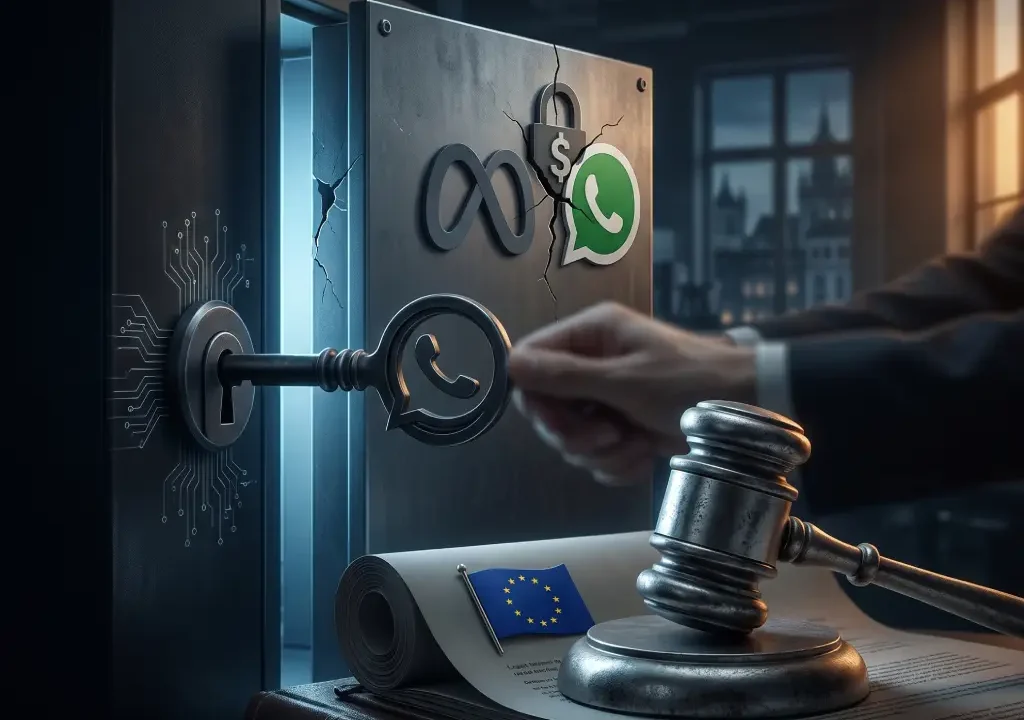
The European Commission has taken strong action against Meta Platforms. On April 15, 2026, regulators notified Meta that its EU Meta WhatsApp AI fee policy appears to breach EU antitrust rules. The Commission intends to impose interim measures ordering Meta to roll back the fees charged to rival AI chatbots accessing WhatsApp.
This latest development escalates a months-long investigation into Meta’s control over the popular messaging platform. By imposing access fees, Meta is accused of effectively excluding third-party AI assistants, giving its own Meta AI an unfair advantage in a rapidly growing market.
EU Meta WhatsApp AI Fee Antitrust Order 2026: What Happened?
In October 2025, Meta updated its WhatsApp Business API terms, initially blocking rival AI chatbots and allowing only its own Meta AI assistant. Following complaints and pressure from the European Commission and Italy’s competition authority, Meta partially reversed course in March 2026.
The company agreed to allow general-purpose AI chatbots on WhatsApp in Europe for 12 months. However, it introduced per-message fees ranging from approximately €0.0490 to €0.1323 for non-template messages, depending on the country.
EU regulators quickly determined that these charges make access prohibitively expensive for many competitors. A typical conversation with an AI assistant involves dozens of messages, potentially costing several euros per interaction. As a result, the Commission views the fee structure as “effectively equivalent” to an outright ban.
Why the EU Ordered Meta to Roll Back WhatsApp AI Fee
The European Commission argues that WhatsApp holds a dominant position in messaging services across the EU. By restricting or making expensive the integration of rival AI assistants through the Business API, Meta risks abusing that dominance to stifle competition in the emerging AI assistant market.
EU antitrust chief Teresa Ribera has emphasised the need to protect effective competition in fast-developing AI sectors. Interim measures are being considered to prevent serious and irreparable harm to rivals while the full investigation continues. These measures would likely require Meta to restore access under pre-October 2025 terms — without the new fees.
Meta maintains that its policy changes are legitimate and that rivals have other ways to reach users. The company also argues that the EU’s approach could unfairly benefit large AI players capable of absorbing high fees.
Background of the EU Investigation into Meta WhatsApp AI Access
The dispute began in late 2025 when Meta updated WhatsApp Business terms to limit third-party AI providers. In December 2025 and February 2026, the Commission sent statements of objections and threatened interim measures. Italy’s watchdog had already ordered similar restrictions earlier.
In response, Meta offered the 12-month paid access compromise in March 2026 to head off immediate enforcement. However, the April 15 notification shows the Commission is not satisfied. Regulators believe the fee-based model continues to exclude smaller innovators and new entrants from effectively competing on WhatsApp’s massive user base of over two billion people globally.
This case forms part of broader EU scrutiny of Big Tech’s role in AI, including how dominant platforms can leverage their ecosystems to favour their own services.
Key Timeline of EU Meta WhatsApp AI Fee Dispute
| Date | Event | Outcome |
|---|---|---|
| October 2025 | Meta updates WhatsApp Business API terms | Rival AI chatbots effectively blocked |
| December 2025 | EU opens formal antitrust investigation | Investigation begins |
| February 2026 | Commission sends Statement of Objections | Threatens interim measures |
| March 2026 | Meta offers 12-month paid access to rivals | Temporary concession |
| April 15, 2026 | EU notifies Meta to roll back fees | Plans interim measures to enforce rollback |
This timeline shows the escalating regulatory pressure on Meta.
Impact of EU Meta WhatsApp AI Fee Decision on Competition and Innovation
If the EU successfully orders a rollback, rival AI providers such as those offering ChatGPT integrations, Google Gemini, or independent chatbots could gain easier, more affordable access to WhatsApp users. This would promote greater choice for businesses and consumers using the platform for customer service, automation, and personalised interactions.
For Meta, the decision could limit its ability to monetise the WhatsApp Business API exclusively through its own AI while increasing competitive pressure on Meta AI. However, it might also encourage more innovation as third-party developers build creative AI experiences on top of WhatsApp.
Businesses relying on WhatsApp for customer engagement may benefit from more diverse AI tools at potentially lower effective costs. On the other hand, if fees remain in some form, larger AI companies might still dominate, while smaller startups struggle with costs.
Meta’s Response and Broader Implications for Big Tech
Meta has criticised the EU’s actions, arguing they interfere with legitimate business practices and could distort the market in favour of well-funded competitors. The company stresses that users already have access to various AI options and that its policies aim to maintain platform quality and security.
This case highlights growing tensions between European regulators and US tech giants over AI governance. The EU’s Digital Markets Act (DMA) and competition rules increasingly target “gatekeeper” platforms to ensure fair access and prevent self-preferencing.
A final ruling could result in significant fines — up to 10% of Meta’s global annual revenue — if a violation is confirmed. Even interim measures would force immediate changes during the investigation, which may take years to conclude.
Potential Outcomes of the EU Order
- Rollback of Fees — Rival AI chatbots regain free or low-cost access under previous terms.
- Modified Access Model — Meta may negotiate a fairer pricing structure acceptable to regulators.
- Increased Scrutiny — Broader implications for how Meta integrates AI across Facebook, Instagram, and other services.
- Innovation Boost — More third-party AI development on WhatsApp, benefiting users with diverse tools.
Future Outlook for WhatsApp AI and EU Antitrust Enforcement
The EU’s swift move to order a rollback of the EU Meta WhatsApp AI fee demonstrates regulators’ determination to act quickly in fast-evolving AI markets. As AI assistants become central to messaging and business communication, ensuring open competition will remain a priority.
For users in Europe, the outcome could mean richer AI experiences on WhatsApp without being locked into Meta’s own assistant. For the wider tech industry, the case sets an important precedent on platform access, interoperability, and the limits of dominant firms in emerging technologies.
Meta is expected to respond formally and may challenge any interim measures in court. In the meantime, the Commission will continue analysing the broader antitrust case.
In summary, the European Commission’s order for Meta to roll back its WhatsApp AI fee underscores the EU’s commitment to preventing tech giants from leveraging dominant platforms to control adjacent markets like AI. Whether through fees or outright restrictions, such practices risk harming competition and innovation.
As the investigation proceeds, businesses, developers, and consumers will watch closely to see how open WhatsApp remains to the next generation of AI tools. This case could shape the future of AI integration in messaging apps across Europe and influence global regulatory approaches.