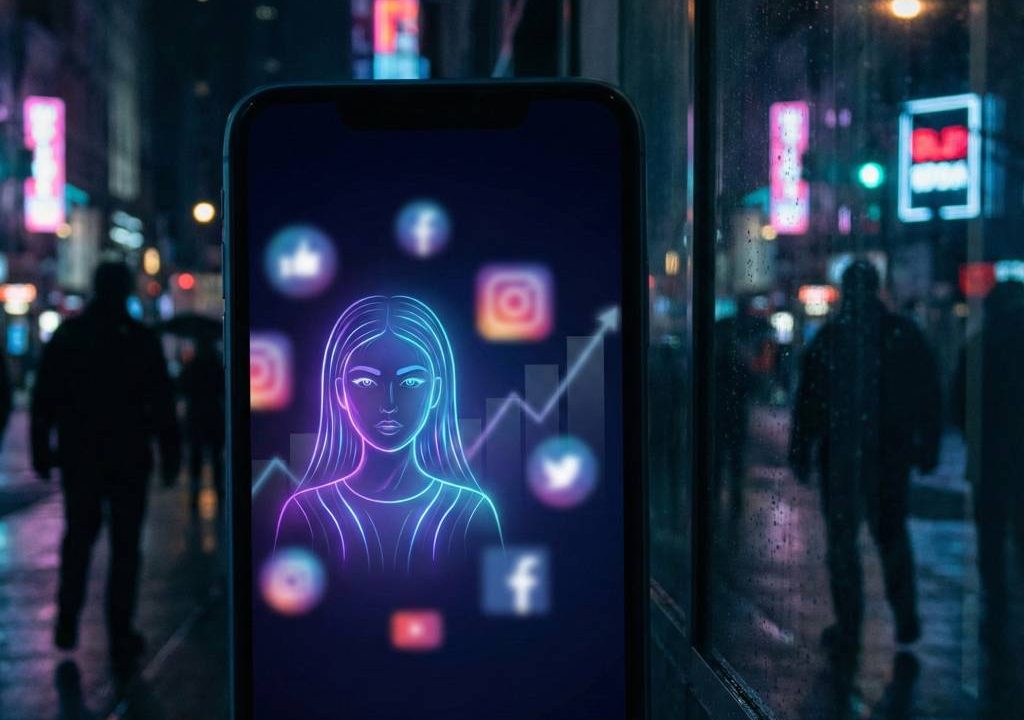
In 2026, AI influencers have moved from experimental gimmick to multi-million-dollar marketing reality. Virtual personalities like Lil Miquela, Aitana Lopez, Imma, and Shudu now command hundreds of thousands to millions of followers, secure brand deals, and generate engagement rates that sometimes surpass real humans. Brands from luxury fashion to fast food are asking: is this a sustainable marketing trend or just another passing social media fad? This article examines the explosive growth of AI influencers, real performance data, cost-benefit reality, ethical concerns, and what the future likely holds.
What Are AI Influencers and Why Are They Growing So Fast?
AI influencers are fully synthetic digital characters created with 3D modeling, generative AI, motion capture, and increasingly photorealistic rendering engines. They post lifestyle content, model clothing, give beauty advice, promote products, and interact with followers via scripted or AI-generated replies. Growth drivers in 2026 include:
- Zero travel, location, or scheduling conflicts
- 100% brand-safe content control
- Infinite scalability (24/7 posting)
- Dramatic cost savings vs. human influencers
- Ability to test dozens of creative directions instantly
The Business Case: Why Brands Love AI Influencers in 2026
The strongest argument for AI influencers is economics. A mid-tier human influencer (100k–500k followers) charges $5,000–$25,000 per post. Top-tier virtual influencers can deliver similar or higher engagement for $2,000–$12,000 per campaign—sometimes flat licensing fees. Brands also avoid PR crises, as every word and image is pre-approved. Luxury houses (Balenciaga, Prada, Calvin Klein) and mass-market brands (Samsung, Amazon, Coca-Cola) have all run major campaigns with virtual talent.
Real-World Examples of Successful AI Influencers
Lil Miquela – The Pioneer Still Dominating
Since 2016, Miquela has collaborated with Dior, Samsung, Prada, and Calvin Klein. 2026 stats: ~2.8M Instagram followers, consistent 1.5–3% engagement rate (above industry average for humans in her tier). She remains the gold standard.
Aitana Lopez – The Highest-Earning Virtual Model
Created by The Clueless agency in Spain, Aitana reportedly earned over €10,000/month in 2025–2026 through brand deals alone. Her hyper-realistic look and relatable “freelance fitness model” persona drive strong conversion rates.
Imma and Shudu – Fashion’s Digital Supermodels
Imma (Japan) and Shudu (South Africa/UK) dominate high-fashion campaigns for Balmain, Dior, and Vogue. Both regularly appear in physical fashion shows via AR and large-scale projections.
Advantages vs. Drawbacks: Trend or Temporary Fad?
Advantages
- Cost: 30–70% cheaper than equivalent human reach
- Control: No scandals, no off-brand behavior
- Availability: Unlimited shoots, any location/time
- Consistency: Perfect look, lighting, mood every post
Drawbacks
- Audience fatigue: Some users feel “creepy” or disingenuous
- Lower emotional connection vs. authentic humans
- Disclosure requirements (FTC, EU AI Act) can reduce trust
- Creative limitations: Still struggle with truly spontaneous content
Engagement, Cost, and ROI: What the Data Shows
2025–2026 studies show mixed but promising numbers:
- AI influencers average 1.2–2.8% engagement (vs. 1–1.8% human mid-tier)
- Conversion rates 15–40% higher in controlled campaigns (perfect call-to-action placement)
- Cost-per-engagement 40–65% lower than human equivalents
Brands report strongest ROI in fashion, beauty, gaming, and tech verticals.
Ethical and Audience Perception Challenges
Critics highlight deception risk, job displacement for real influencers, lack of diversity (many early AI models skewed toward idealized beauty standards), and potential mental health impact on young audiences comparing themselves to unattainable digital perfection. The EU AI Act and U.S. FTC now require clear “synthetic media” labeling.
AI Influencers Are Here to Stay
AI influencers are no longer a fad—they are a permanent fixture in modern marketing. They won’t fully replace human creators (authenticity still wins long-term), but they excel in controlled, high-volume, brand-safe campaigns where cost efficiency and creative control matter most. Smart brands in 2026 use hybrid strategies: humans for storytelling and emotional depth, AI influencers for scale, testing, and always-on presence.
For deeper reading, see Forbes’ 2026 AI Influencer Report or The Clueless Agency – Creators of Aitana Lopez.
Suggested Blog Tags AI influencers, virtual influencers, AI marketing, synthetic media, digital marketing trends 2026, influencer marketing, AI in fashion, virtual models, future of social media, AI ethics