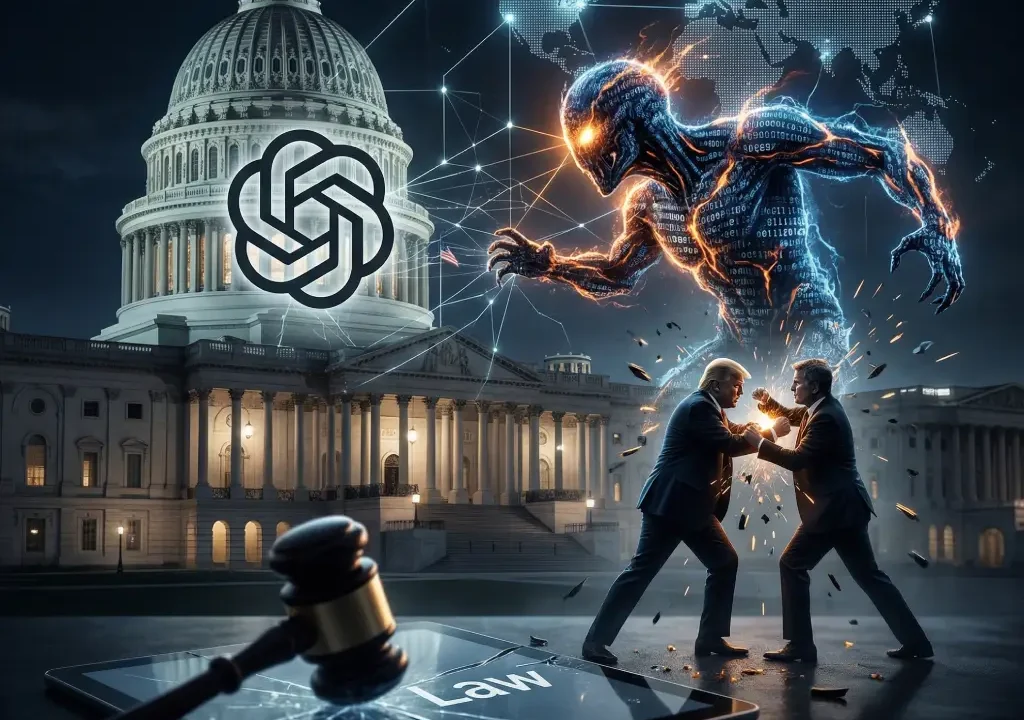
In February 2026, the global AI landscape shows stark contrasts between Europe‘s structured, rights-focused approach and the USA‘s innovation-driven, fragmented model. The EU AI Act—the world’s first comprehensive AI law—imposes binding risk-based rules, while the US under the Trump administration prioritizes deregulation via executive orders challenging state laws. This divide affects developers, businesses, and users, especially as frontier models edge toward AGI (Artificial General Intelligence) capabilities. Understanding these differences is essential for compliance, innovation, and risk management.
Overview of AI Regulation Approaches in 2026
Europe emphasizes fundamental rights, safety, and transparency through unified legislation. The US favors market-led growth, with federal policy revoking prior safety mandates and contesting state rules seen as barriers.
The EU AI Act: Comprehensive and Risk-Based Framework
The EU AI Act (effective August 2024) categorizes AI by risk: unacceptable (banned), high-risk (strict obligations), limited (transparency), and minimal.
Key Provisions and Implementation Timeline
Prohibitions (e.g., social scoring) applied February 2025. General-purpose AI (GPAI) rules—including transparency and documentation for powerful models—started August 2025. High-risk obligations (e.g., biometrics, employment AI) largely apply August 2026, with some extensions proposed to 2027 via the Digital Omnibus. GPAI models face systemic risk assessments if exceeding compute thresholds.
Obligations for General-Purpose AI and High-Risk Systems
Providers of powerful GPAI must disclose training summaries, ensure copyright compliance, and mitigate risks. High-risk systems require conformity assessments, risk management, data quality, and human oversight. The EU AI Office enforces with fines up to 7% global turnover.
Learn more at the official EU AI Act site.
US AI Regulation: Federal Deregulation vs State Patchwork
No comprehensive federal law exists. The Trump administration revoked Biden’s 2023 safety order and issued orders promoting innovation.
Trump Administration’s Deregulatory Push
Executive Order 14179 (January 2025) and December 2025 order aim for a “minimally burdensome national framework.” A DOJ AI Litigation Task Force challenges state laws conflicting with federal priorities, threatening funding cuts. Focus: American AI dominance over perceived overregulation.
State-Level AI Laws and Federal Challenges
Over 1,000 bills in 2025; many states enacted rules. Colorado AI Act (effective June 2026) requires impact assessments for high-risk systems. California’s frontier AI transparency law (2026) mandates safety frameworks. Others target employment, deepfakes, or discrimination. Federal efforts create uncertainty, with potential lawsuits.
See the White House AI orders.
Key Differences: Europe vs USA in 2026
| Aspect | Europe (EU AI Act) | USA (Federal + States) |
|---|---|---|
| Approach | Binding, risk-based, rights-focused | Deregulatory federal; patchwork states |
| Scope | Extraterritorial, unified | Domestic focus, no federal statute |
| High-Risk AI | Strict obligations (2026+) | State-specific (e.g., Colorado 2026) |
| GPAI/Frontier Models | Transparency, risk mitigation | Voluntary or state transparency laws |
| Enforcement | EU AI Office, heavy fines | Agency guidance, state AGs, DOJ challenges |
| Innovation Impact | Compliance burden concerns | Prioritizes speed and leadership |
Europe regulates preemptively; US reacts via states while federal pushes back.
Implications for Businesses and Global Compliance
Multinational firms face dual compliance: EU extraterritorial reach affects US companies serving Europe. AGI (Artificial General Intelligence) pursuits—high-compute models—trigger EU GPAI rules, while US deregulation accelerates development but risks fragmentation. Prepare via risk assessments, documentation, and monitoring updates.
Navigating the Transatlantic Divide
AI regulation in Europe vs USA in 2026 highlights a philosophical split: Europe’s precautionary rights emphasis vs USA’s innovation-first stance. As AGI (Artificial General Intelligence) nears, harmonization discussions (e.g., US-EU Trade and Tech Council) may emerge, but divergence persists. Businesses should track EU enforcement and US state/federal clashes for strategic compliance. For updates, visit European Commission AI page.