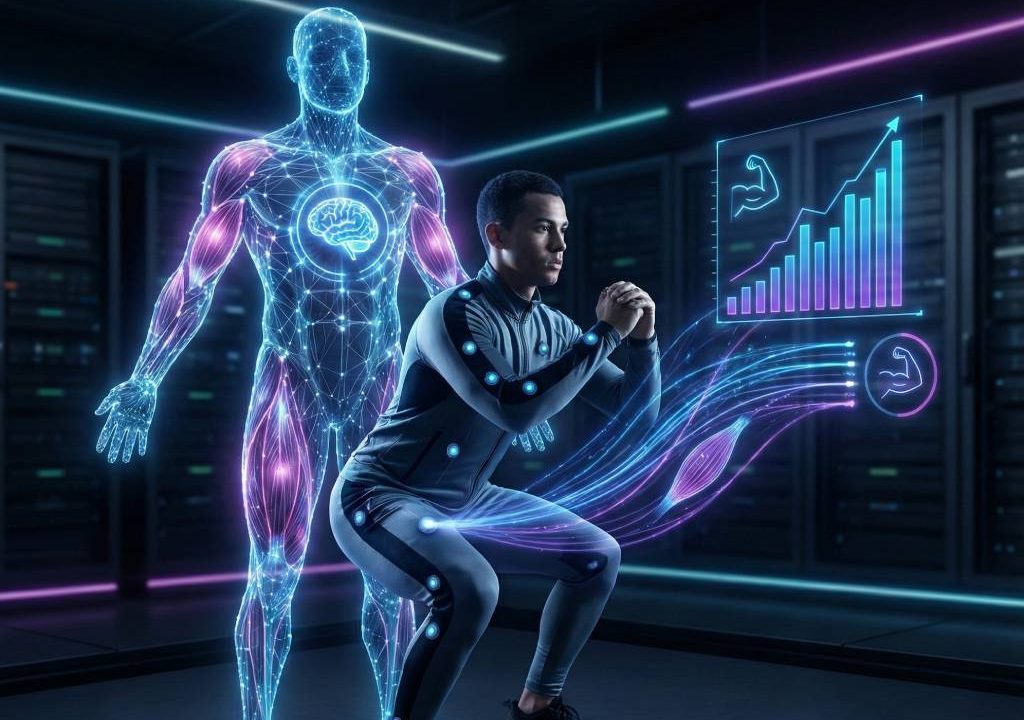
In 2026, building muscle isn’t about endless trial and error—it’s about precision. AI-driven fitness tracking analyzes your workouts, recovery, and progress in real-time to deliver hyper-personalized programs that optimize hypertrophy. Users following AI recommendations often see 20-50% faster strength gains and significantly more muscle compared to manual planning.
Apps like Fitbod and JuggernautAI use machine learning to adjust volume, intensity, and recovery, helping intermediate lifters double their muscle gains by ensuring consistent progressive overload without burnout. This guide shows you exactly how to leverage AI-driven fitness tracking for explosive results.
What Is AI-Driven Fitness Tracking and How It Transforms Muscle Building
AI-driven fitness tracking combines wearables (smartwatches, rings) with intelligent apps that collect data on reps, sets, weights, heart rate variability (HRV), sleep, and even form via phone cameras. The AI then:
- Predicts optimal training variables for hypertrophy
- Prevents overtraining by monitoring recovery signals
- Automates progressive overload (increasing load/reps intelligently)
Unlike static programs, AI-driven fitness tracking evolves daily based on your performance, making it ideal for busy people chasing serious muscle growth.
Key Benefits of AI-Driven Fitness Tracking for Hypertrophy
- Faster Progressive Overload: AI adjusts weights/reps automatically—Fitbod users improve estimated 1RM ~27% faster than manual planners.
- Optimized Recovery: Tracks HRV and sleep to schedule rest days, reducing injury risk and allowing more frequent training.
- Personalized Volume & Frequency: Ensures each muscle group gets ideal stimulus without junk volume.
- Data-Driven Insights: Spots plateaus early and suggests fixes (e.g., deload, technique tweaks).
- Motivation & Consistency: Gamified progress tracking keeps you adherent longer.
Studies and user data show consistent AI use leads to double-digit muscle and strength increases in key lifts.
Top AI-Powered Apps and Trackers for Muscle Gains in 2026
| App/Tracker | Best For | Key AI Feature | Cost |
|---|---|---|---|
| Fitbod | Overall muscle building | Recovery-based programming, progressive overload | Subscription (~$13/mo) |
| JuggernautAI | Advanced hypertrophy | Adaptive powerlifting/hypertrophy plans | Premium |
| Caliber AI | Personalized coaching | Real-time adjustments, form feedback | Subscription |
| Load Muscle | AI hypertrophy programming | 4,000+ exercises, built-in periodization | Free tier + paid |
| Whoop / Oura Ring | Recovery tracking | HRV, sleep analysis integrated with apps | Hardware + sub |
| Garmin Venu 3 | Accurate wearable tracking | Strength training metrics, body battery | One-time purchase |
Start with Fitbod for seamless integration—it’s frequently ranked as the top for data-backed gains.
Explore Fitbod’s muscle-building analytics in their best AI fitness apps guide.
Step-by-Step Guide to Implementing AI-Driven Fitness Tracking
- Choose Your Stack: Pick an app (e.g., Fitbod) + wearable (Garmin or Whoop for HRV).
- Input Baseline Data: Log age, experience, goals (hypertrophy), equipment, and past workouts.
- Sync Devices: Connect wearable for auto-logging heart rate, sleep, and recovery.
- Follow AI Workouts: Let the app generate sessions—focus on compound lifts (squat, bench, deadlift).
- Log Accurately: Record RPE, weights, and reps—AI learns from every set.
- Monitor Weekly Insights: Check progress dashboards for volume trends and adjustments.
- Adjust Nutrition & Rest: Use AI suggestions (or pair with nutrition apps) for protein timing.
Consistency over 12 weeks often yields visible doubling of gains via optimized stimulus.
Real User Results and Data on Doubling Muscle Gains
Fitbod analytics show users following AI plans gain strength faster and build more muscle through better recovery programming. Many report 10-20% more hypertrophy in major groups due to avoided overtraining.
In bodybuilding communities, AI adopters cite faster progress toward double gains compared to cookie-cutter programs.
Integrating Recovery, Nutrition, and Progressive Overload with AI
Pair AI-driven fitness tracking with:
- HRV-guided rest (Whoop/Oura)
- Protein/carb timing based on workout data
- Periodic DEXA scans for true muscle measurement
AI ensures progressive overload hits the hypertrophy sweet spot (6-20 reps, near-failure sets).
Common Mistakes to Avoid with AI-Driven Fitness Tracking
- Ignoring recovery signals → Leads to burnout
- Manual overrides too often → Defeats personalization
- Poor logging → Garbage in, garbage out
- Neglecting nutrition → AI handles training, not calories
Fix by trusting the data and iterating.
Future of AI in Muscle Building – What’s Next in 2026
Expect more multimodal AI (form analysis via video), predictive gains modeling, and seamless nutrition integration. Early adopters using AI-driven fitness tracking now will lead the pack.
Start today: Download Fitbod or similar, log your next workout, and watch the gains accelerate. Double your muscle—data doesn’t lie.