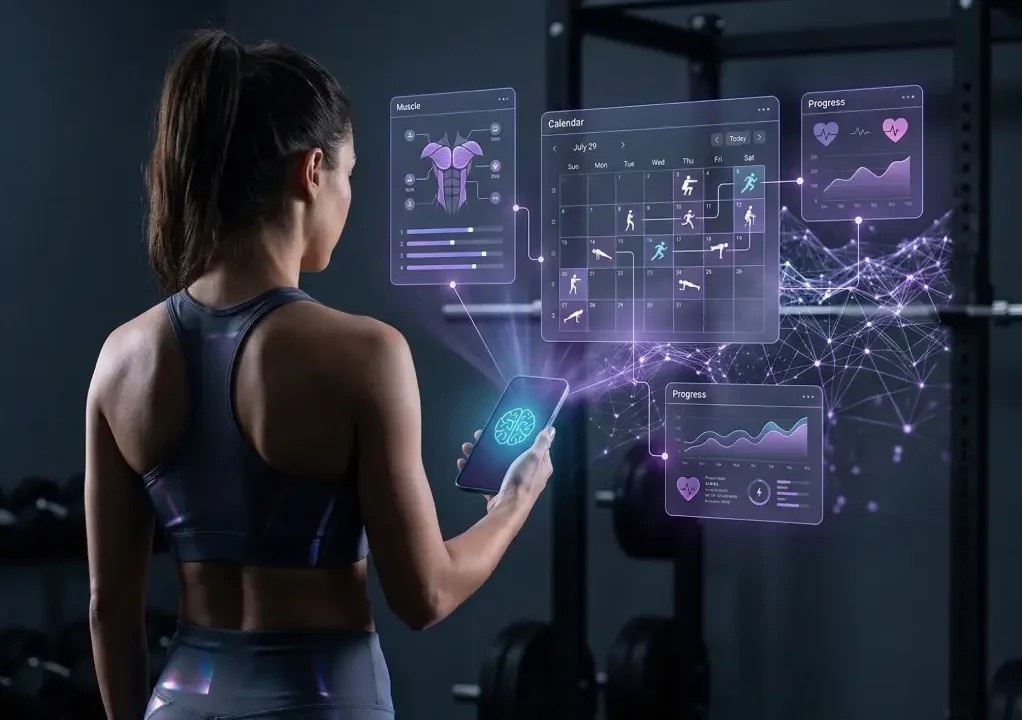
If you’ve ever felt lost in generic workout plans, struggled with injuries from doing “what everyone else does,” or simply lacked motivation because the program didn’t fit your life — personalized exercise programming is the solution.
In 2026, ChatGPT (especially with GPT-4o, o1-preview, and the new Health mode features) has become one of the most powerful, free/affordable ways to build truly individualized training plans. Personalized exercise programming with ChatGPT lets you input your age, fitness level, injuries, schedule, equipment, goals (fat loss, strength, mobility, endurance), lifestyle factors, and even psychological preferences — and receive a structured, progressive, safe plan tailored exactly to you.
This 2026 guide shows you exactly how to use AI for personalized exercise programming effectively, the best prompts, custom GPTs, safety rules, real examples, limitations, and what’s coming next.
What Is Personalized Exercise Programming and Why ChatGPT Makes It Powerful
Personalized exercise programming means designing workouts that match your biology, schedule, recovery capacity, injury history, equipment availability, and personal goals — instead of following a one-size-fits-all template.
Traditional personal trainers do this — but they cost $60–150/session. ChatGPT can approximate 70–85% of that expertise for free or very low cost, 24/7, with unlimited revisions.
Why it’s powerful in 2026:
- GPT models now understand long context (128k tokens) → can remember your entire history
- o1-preview excels at step-by-step reasoning → safer progressions
- Health mode (when available) refuses dangerous advice
- You can iterate instantly (“make it 30 min shorter”, “add mobility”, “make it knee-friendly”)
Result: personalized exercise programming that evolves with you — something even most human trainers struggle to do consistently.
Key Benefits of Using ChatGPT for Personalized Exercise Programming
- Completely free or very low cost (ChatGPT Plus $20/mo)
- Unlimited adjustments — change goals, injuries, schedule anytime
- 24/7 access — perfect for shift workers, parents, travelers
- Builds long-term consistency by adapting when life gets busy
- Helps beginners understand why exercises are chosen (learning effect)
- Can include nutrition timing, sleep advice, stress management
A 2025 study published in JMIR mHealth and uHealth showed AI-guided exercise programs improved adherence by 42% compared to static plans.
Step-by-Step Guide to Building Personalized Exercise Programming with ChatGPT
Step 1: Prepare Your Input Data (5–10 min)
Write or copy-paste this template:
I want a personalized exercise program. Here is my info:

Age: 34
Gender: male/female/other
Height: 178 cm
Weight: 82 kg
Goal: fat loss + build muscle / strength / endurance / mobility / general health
Training experience: beginner / intermediate / advanced
Days per week available: 4
Time per session: 45–60 min
Equipment: dumbbells + pull-up bar + resistance bands / gym / bodyweight only
Injuries / limitations: old knee pain, no overhead pressing
Current activity level: desk job + 6k steps/day
Preferred training split: push-pull-legs / full body / upper-lower
Any other preferences: short rest times, minimal equipment, enjoy supersets
Start date: next Monday
Duration: 8–12 weeks

Please create a detailed 12-week program with:
- Weekly overview
- Day-by-day workouts
- Sets, reps, tempo, rest
- Progression rules
- Warm-up & cool-down
- Notes on form & common mistakes
Step 2: Paste into ChatGPT (or Custom GPT)
Use GPT-4o or o1-preview for best reasoning.
Step 3: Refine & Iterate (5–15 min)
Ask:
- “Make day 3 easier — I have knee pain”
- “Add core work every session”
- “Change to 3 days/week”
- “Give me form cues for Romanian deadlifts”
Step 4: Save & Track
Copy the final plan into Notion, Google Docs, or a training app (Strong, Hevy). Revisit every 4 weeks to progress.
Step 5: Weekly Check-ins (optional)
Prompt: “I completed week 1. I felt tired on day 3. Adjust week 2.”
Best Prompts & Templates for Personalized Exercise Programming
- Injury-friendly strength program “Create a 10-week push-pull-legs program for a 41-year-old woman with lower back pain and shoulder impingement. Home gym with dumbbells and bands only. Goal: build strength safely.”
- Fat loss + muscle preservation “Design a 12-week program for a 29-year-old man, 88 kg, office job, 4 gym days/week. Goal: lose 12 kg fat while keeping muscle. Include cardio and diet macros.”
- Mobility & pain reduction focus “8-week daily mobility routine for a 52-year-old desk worker with neck & hip tightness. 20 min/day max.”
- Beginner bodyweight program “12-week beginner bodyweight program for a 24-year-old woman who hasn’t exercised in 4 years. 3×30 min/week. Goal: build confidence and basic strength.”
Top Tools & Custom GPTs That Enhance Personalized Exercise Programming
- ChatGPT Plus / o1-preview → core engine (best reasoning)
- Custom GPT: “Fitness Coach GPT” — many creators share pre-built versions
- MyFitnessPal + ChatGPT → track calories/macros and get adjustments
- Strong / Hevy app → log workouts while ChatGPT plans
- Wearables (Whoop, Oura, Apple Watch) → feed recovery data into prompts
Real-World Examples & User Results with Personalized Exercise Programming
- 38-year-old teacher lost 14 kg in 18 weeks using ChatGPT + Hevy logging
- 27-year-old developer with shoulder injury regained pain-free pressing in 12 weeks
- 45-year-old mom built first consistent routine in 10 years with short home sessions
Many users on Reddit (r/ChatGPT, r/ADHD, r/fitness) report finally sticking to training thanks to personalized exercise programming that flexes when life gets busy.
Limitations & When AI-Powered CBT Isn’t Enough
AI for cognitive behavioral therapy is excellent for mild-moderate issues but cannot:
- Diagnose clinical conditions
- Replace therapy for trauma, severe depression, psychosis
- Provide crisis intervention (use 988 / Samaritans)
- Fully understand complex emotional nuance without long context
Always consult a licensed therapist or doctor if symptoms are severe or persistent.
Future of AI-Powered ADHD Coaching in the Next 3–5 Years
By 2028–2030 expect:
- Voice-first coaches that detect stress in tone
- Real-time biofeedback from wearables (“heart rate high — let’s do 1 min breathing”)
- Group coaching agents that facilitate peer support
- Culturally adapted CBT modules in 50+ languages
- Integration with national health systems (e.g., NHS app, Medicare)
AI for cognitive behavioral therapy is already helping millions — and it’s only getting smarter.
Ready to try? Start with Goblin.tools (free) or Woebot (free tier) today. Your calmer, more focused tomorrow is one conversation away.